Three Ethiopian Entrepreneurs Make Africa’s Business Heroes 2026 Top 100 — But the Gap Remains Wide
Ethiopia’s three finalists represent genuine achievement. They also expose how far the country’s startup ecosystem still has to travel.
A Continental Competition, an Ethiopian Footprint
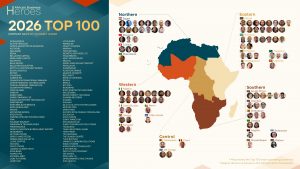
Three Ethiopian entrepreneurs have been selected among Africa’s Top 100 entrepreneurs for 2026 by Africa’s Business Heroes (ABH), a flagship initiative of the Jack Ma Foundation and Alibaba Philanthropy, following a competition that drew more than 24,000 applications from all 54 African countries.

The Ethiopian founders recognised this year are Bersufekad Getachew Amare, founder and chief executive officer of EagleLion System Technology; Nael Hailemariam, co-founder and chief executive officer of Chapa; and Samson Alemu Fentaye, co-founder and chief executive officer of Thur Biotech. EagleLion builds digital banking, payments, and enterprise solutions for institutions including CBE, Dashen Bank, Mastercard, and Visa. Chapa operates one of Ethiopia’s leading online payment gateways, enabling businesses to accept and process digital payments. Thur Biotech develops biofertilisers and biological crop protection products aimed at improving soil health and agricultural productivity.
The 2026 Top 100 cohort represents 27 countries, with an average founder age of 38 and an average business age of 6.5 years. Collectively, the selected businesses generated $170 million in revenue during 2025, employed more than 6,200 people, and served approximately 10 million customers. For the first time in ABH’s history, the competition expanded its first round of finalists from a Top 50 to a Top 100 — a structural shift reflecting the growing depth of African entrepreneurship as the programme approaches its tenth year. Agriculture accounts for 21 percent of the cohort, followed by financial services at 12 percent.
The selected entrepreneurs will now advance to the semi-final stage, with 20 finalists pitching in Nairobi in August for a share of a $1.5 million grant fund. The top prize is $300,000.
The Gap That Three Cannot Close
The recognition is significant. But the numbers around it deserve equal attention. Egypt, Nigeria and Kenya each placed 15 representatives in the Top 100 — five times Ethiopia’s count — while Rwanda placed nine. Ethiopia, with a population exceeding 120 million and the second-largest economy in Sub-Saharan Africa, placed three. That disparity is not an accident of talent. It is a structural outcome.
Access to early-stage capital is the most fundamental constraint. The venture capital market that has matured in Nairobi, Lagos and Cairo over the past decade does not exist in Addis Ababa in any comparable form. Ethiopian founders largely self-fund or depend on grant programmes precisely because institutional risk capital is scarce. The banking sector, oriented toward trade finance and asset-backed lending, offers limited utility to founders whose primary collateral is intellectual property and market traction. Foreign exchange access compounds the problem — digital startups paying for cloud infrastructure and software licences in hard currency face an operational friction that counterparts in more open forex markets do not.
What Needs to Change
Producing more than three ABH-calibre entrepreneurs from a country of Ethiopia’s scale requires an ecosystem with functioning components across capital, regulation and institutional support.
On capital, the government’s push to develop a securities market — including the recent licensing of investment banks and the operationalisation of the Ethiopian Securities Exchange — is meaningful forward motion. But venture-accessible instruments require deliberate design beyond exchange infrastructure. A national venture fund with patient capital and co-investment mandates would address a gap that market forces alone are unlikely to fill soon. Commercial banks, meanwhile, could extend development finance windows and revenue-based lending products calibrated to early-stage cash flows — instruments that exist in comparable African markets but remain limited in Ethiopia.
On regulation, the Startup Proclamation of 2023 created a formal framework, but implementation has lagged intent. Regulatory sandboxes that allow fintech and agritech companies to operate under supervised conditions before full licensing requirements apply would reduce the cost of experimentation at the formation stage — where friction matters most. Dedicated forex allocation for licensed technology companies would address a structural disadvantage that currently pushes founders toward under-investment in the digital infrastructure their businesses require.
Finally, pipeline. ABH draws half its 2026 cohort from returning applicants — founders who prepared across multiple cycles before breaking through. Ethiopia’s three finalists are likely the product of that same iteration. Building a deeper pipeline means investing upstream: in university-based incubators, sector-specific accelerators, and the peer networks that other ecosystems have built and that compound in value over time.
Three entrepreneurs in a Top 100 drawn from 54 countries is not a failure. But Ethiopia is not competing against 54 countries — it is competing against Kenya, Nigeria and Egypt, countries that placed five times as many founders on the same list. The gap is the signal. Whether it narrows depends less on the entrepreneurs Ethiopia produces than on the environment it builds around them.