OLA Energy to Acquire TotalEnergies Ethiopia, Creating Largest Foreign Fuel Retail Network
OLA Energy Group has agreed to acquire TotalEnergies Marketing Ethiopia in a deal that will create the country’s largest foreign-owned fuel retail network and reshape Ethiopia’s downstream petroleum industry.
The transaction, which remains subject to regulatory approval, will see OLA Energy take control of TotalEnergies Ethiopia’s downstream assets, including more than 120 service stations, fuel storage facilities, logistics infrastructure, aviation fuel operations, lubricant business, and non-fuel retail services.
The acquisition marks one of the most significant ownership changes in Ethiopia’s fuel retail market in decades. It comes as the government presses ahead with reforms aimed at liberalising the downstream petroleum sector and encouraging greater private sector participation.
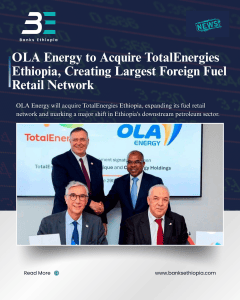
For TotalEnergies, the agreement brings to a close its presence in Ethiopia, which spanned approximately 76 years. Over that period, the French energy company built one of the country’s best-known fuel brands, developing a nationwide network recognised for its fuel quality, operational standards, safety practices, and customer service.
Once completed, the transaction will significantly expand OLA Energy’s footprint across Ethiopia, strengthening its position in retail fuel distribution, aviation fuel supply, lubricant marketing, and commercial energy services.
According to the company, the acquisition aligns with its strategy of expanding across African energy markets while reinforcing its presence in economies with growing long-term demand for petroleum products.
“This agreement reflects our confidence in Ethiopia and in the continued growth potential of Africa’s energy markets,” OLA Energy Executive Chairman Abozid Swalem said in a company statement. He added that the company intends to maintain operational continuity, preserve safety standards, and remain close to customers and local communities throughout the transition.
Formerly known as OiLibya, OLA Energy rebranded in 2018 as part of its strategy to establish itself as a pan-African downstream energy company. Today, the group operates across numerous African countries, supplying fuels, lubricants, liquefied petroleum gas, aviation fuel, marine fuels, and industrial energy products.
The acquisition also reflects broader changes taking place within the global energy industry.
TotalEnergies has been reshaping its international portfolio as it accelerates investments in renewable energy, electricity, hydrogen, and low-carbon technologies. Industry analysts view the Ethiopian transaction as part of the company’s wider strategy of reallocating capital toward businesses that support its long-term energy transition rather than as a withdrawal driven solely by local market conditions.
Nevertheless, Ethiopia’s operating environment has remained challenging for multinational fuel companies. Government influence over retail fuel pricing, limited profit margins, and persistent foreign exchange shortages have constrained commercial flexibility despite recent economic reforms.
Industry observers say the deal also highlights growing confidence in Ethiopia’s long-term energy market. With a population exceeding 130 million and rising demand driven by urbanisation, industrial expansion, and transport growth, the country continues to attract strategic investment despite near-term operational challenges.
Energy analyst Zeleke Belete described the acquisition as both an opportunity and a major responsibility. While OLA Energy gains immediate access to one of Ethiopia’s most valuable fuel distribution networks, he said maintaining the operational standards established by TotalEnergies will be critical to preserving customer confidence.
Industry executives also note that the challenge extends beyond physical infrastructure. Over several decades, Total built a strong reputation among Ethiopian motorists for reliable fuel quality, professional service, and well-maintained retail stations. Successfully managing the transition without disrupting those standards will likely determine how quickly customers embrace the new ownership.
The acquisition comes as Ethiopia continues implementing reforms across its downstream petroleum sector. Authorities have begun opening fuel imports to additional participants, expanding foreign exchange financing arrangements for petroleum purchases, and encouraging greater competition to improve supply resilience and market efficiency.
Market participants say these reforms, together with investments from regional energy companies, could gradually modernise Ethiopia’s fuel supply chain while strengthening competition in one of the country’s most strategically important industries.
If approved, the transaction will not only end one of the longest-running international corporate presences in Ethiopia but also mark the beginning of a new chapter led by an African energy company seeking to expand its influence across the continent’s rapidly evolving downstream petroleum market.