Gambella Delivers Over 5.5 Tonnes of Gold as Ethiopia Strengthens Formal Supply
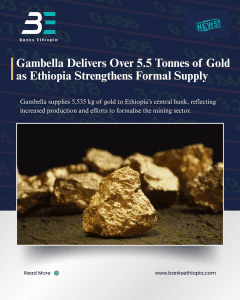
Ethiopia’s gold sector is showing signs of gradual formalisation, with the National Bank of Ethiopia receiving 5,535 kilograms of gold from the Gambella Region during the first nine months of the current fiscal year.
The figures, presented by regional authorities during a performance review attended by Alemitu Umud, indicate a year-on-year increase of more than 1,278 kilograms, reflecting improved output and stronger integration of producers into formal supply channels.
Rising Output Across Mining Segments
The reported gold supply comes from a mix of artisanal miners, small-scale licensed operators, and industrial producers, highlighting the sector’s diverse production base. The increase suggests incremental progress in efforts to expand production capacity while improving oversight across the value chain.
Officials attribute the growth to a combination of enhanced extraction practices, expanded production, and tighter controls aimed at reducing leakage—a persistent challenge in Ethiopia’s gold sector.
Gold as a Strategic Foreign Exchange Source
Gold has become a priority sector in Ethiopia’s macroeconomic strategy, particularly amid ongoing foreign exchange constraints. By requiring producers to sell their output directly to the central bank, authorities aim to capture hard currency inflows and limit informal market activity.
This policy has gained increasing importance as Ethiopia works to stabilize its external position and strengthen reserve accumulation.
Formalisation Efforts Gain Ground
Historically, a large share of Ethiopia’s gold production has been dominated by artisanal mining, often operating outside formal systems. In recent years, however, policymakers have intensified efforts to:
- Formalise small-scale operations
- Improve regulatory oversight
- Attract industrial mining investment
The latest figures from Gambella suggest that these measures are beginning to yield measurable results, particularly in channeling production through official frameworks.
Regional Role in National Output
The Gambella Region remains one of Ethiopia’s key gold-producing areas, alongside regions such as Oromia Region and Benishangul-Gumuz Region.
As production scales and formalisation improves, these regions are expected to play an increasingly important role in supporting Ethiopia’s export revenues and foreign currency supply.
Gradual but Strategic Progress
While challenges around informality and supply chain leakages persist, the rise in officially recorded gold deliveries points to gradual progress. For policymakers, the focus remains on strengthening transparency, improving efficiency, and maximizing the sector’s contribution to the national economy.
source: Birrmetrics