Addis Ababa Launches 1.4 Billion Birr Project to Convert 1,200 Buses to Gas Power
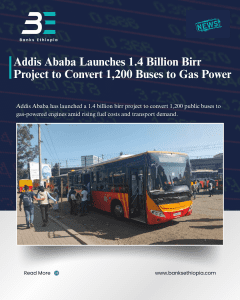
Addis Ababa City Administration has launched a 1.4 billion birr project to convert 1,200 public buses from fuel-powered engines to gas-powered systems as Ethiopia intensifies efforts to reduce fuel import dependence and expand alternative energy use in urban transport.
City officials said more than 273 million birr has already been disbursed to begin implementation of the project.
The announcement was made during the fifth regular assembly of the Addis Ababa City Cabinet.
Shift Toward Alternative Energy Transport
According to Yabibal Addis, the programme aligns with Ethiopia’s broader strategy to utilize domestic gas resources and reduce pressure from rising global fuel costs.
Two pilot buses have already completed engine conversion installations, while a dedicated gas filling station has been constructed at the Kality Depot to support the emerging fleet.
The initiative forms part of Addis Ababa’s wider transition toward cleaner and lower-cost transportation systems. Over the past year, the city has also integrated 100 electric buses into its public transport network as authorities seek to modernize urban mobility and reduce operational fuel expenses.
Fuel Shortages Push New Transport Policies
The transport transition comes as Ethiopia continues facing fuel supply pressure linked to rising global oil prices and disruptions tied to escalating tensions in the Middle East.
Global shipping risks around the Strait of Hormuz have pushed crude oil prices sharply higher, increasing import costs for fuel-dependent economies such as Ethiopia.
In response, city authorities introduced an 80/20 fuel allocation policy, reserving 80 percent of available fuel supplies for public services while allocating the remaining 20 percent to industrial activities and infrastructure projects.
Deputy Mayor Jantirar Abay said the administration is also digitizing fuel payment and monitoring systems through platforms including telebirr to combat illegal fuel trading and coupon fraud.
Officials say the digital system allows authorities to track whether vehicles receiving subsidized fuel are actively operating public transport services.
Public Transport Demand Continues Rising
Demand for public transport in Addis Ababa continues to increase rapidly as fuel shortages and rising transportation costs affect commuters.
City officials said public transport usage has now exceeded 43 percent, with daily passenger volumes approaching four million people.
The administration currently operates:
- 1,276 fuel-powered buses
- Electric buses
- Newly emerging gas-powered fleets
Authorities say expanding alternative-energy transportation is becoming increasingly important as the city attempts to maintain transport reliability while managing growing fiscal and fuel pressures.
Long-Term Urban Mobility Strategy
Officials also highlighted ongoing investments in:
- Road expansion projects
- Pedestrian walkways
- Bicycle lanes
- Traffic signaling systems
- Road safety infrastructure
While acknowledging that short-term fuel supply disruptions remain a challenge, city authorities argue that transitioning toward gas and electric transportation will improve the long-term sustainability and resilience of Addis Ababa’s public transport system.
source Birrmetrics