Ethiopia Plans Fully Online Passport Applications Through Fayda Digital ID Integration
Ethiopia is preparing to launch a new passport issuance system that will allow citizens to apply for passports entirely online by integrating services with the national digital identification platform, Fayda.
The reform, announced by the Immigration and Citizenship Service (ICS), is expected to eliminate the need for in-person biometric registration and significantly reduce the administrative challenges that have long affected passport issuance across the country.
Under the new system, citizens who have already enrolled in the Fayda digital ID program will be able to use their existing biometric and personal information to complete passport applications remotely. Officials say applicants will no longer need to visit immigration offices for fingerprint collection, enabling the entire process to be completed online.
The initiative marks one of the most significant digital government service reforms undertaken in recent years and is expected to improve accessibility for citizens living far from passport service centers.
For years, passport applicants have faced lengthy waiting periods, extensive queues, and repeated visits to immigration offices. Efforts to modernize the system were often slowed by outdated legal frameworks, fragmented records, and limited digital infrastructure.
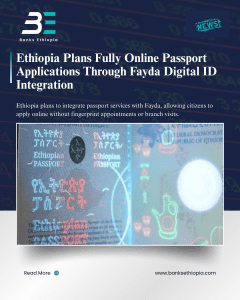
The new platform seeks to address these challenges by leveraging Fayda, Ethiopia’s national digital identity system. The program assigns citizens a unique identification number and securely stores verified personal and biometric data, creating a foundation for more efficient delivery of public and private sector services.
According to the Immigration and Citizenship Service, the integration will enable secure identity verification without requiring applicants to physically appear for biometric enrollment. Officials believe the approach will reduce processing times, improve service quality, and increase convenience for users nationwide.
Director General Selamawit Dawit said the reform forms part of a broader modernization strategy aimed at transforming service delivery and responding to public concerns regarding passport accessibility.
She noted that the Service has implemented several reforms over the past two years, including technological upgrades, institutional restructuring, and the expansion of electronic passport services.
“The outdated passport service system is being overhauled,” Selamawit said, adding that the introduction of the electronic passport has already contributed to significant operational improvements and helped modernize service delivery practices.
The Director General also highlighted legal reforms that have enabled the agency to align older regulations with current technological capabilities. According to the Service, more than 350,000 pending passport applications were cleared within a short period following these changes.
To address concerns related to fraud and identity misuse, the new system will incorporate enhanced monitoring and verification mechanisms. Officials stated that digital identity data will be used only once for each transaction, reducing opportunities for unauthorized access and duplication.
The Immigration and Citizenship Service reported that electronic passport services are now available at 22 branches nationwide. Depending on the service category selected, citizens can currently obtain passports within half a day, two days, or five days.
The planned integration has also received support from lawmakers, who have repeatedly called for stronger links between passport services and the Fayda digital ID platform. Members of Parliament argue that a fully integrated system would reduce redundant data collection, improve efficiency, and enable citizens to access services remotely.
Legislators have further urged the Service to develop a reliable and user-friendly online portal that allows applicants to submit requests, make payments, and track application progress digitally. Concerns have previously been raised regarding the functionality and reliability of existing online systems.
Parliament has also emphasized the importance of interoperability between government institutions, encouraging the Immigration and Citizenship Service to establish data-sharing capabilities with agencies such as the civil registry and tax authority to streamline verification processes.
Officials say preparations for the launch of the integrated platform are ongoing. Once implemented, the system is expected to represent a major advancement in Ethiopia’s digital government agenda and improve access to passport services for millions of citizens across the country.